
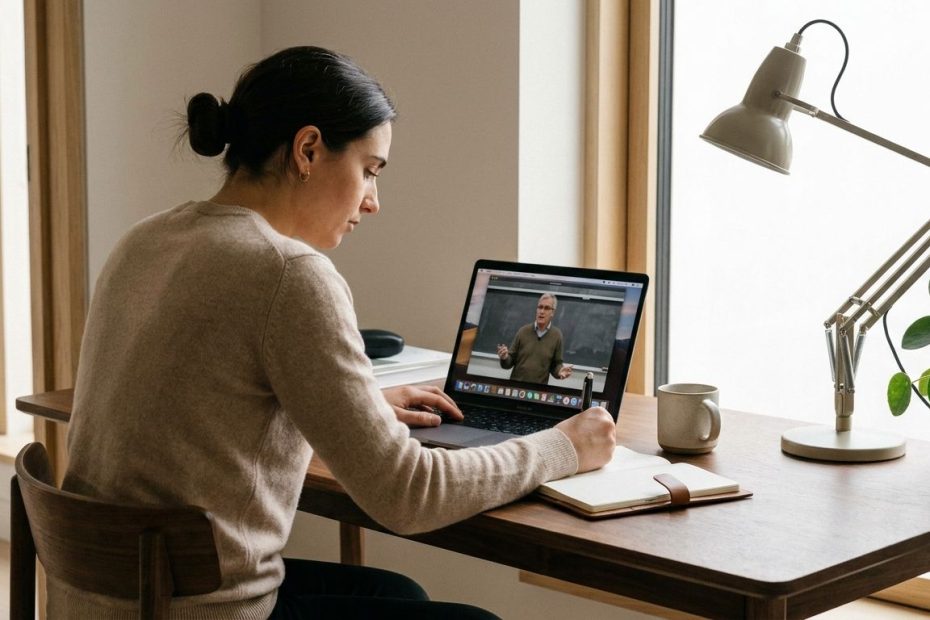
The best ways to stay focused during long online classes are practical habits that reduce distraction, add movement, and keep your brain actively involved before fatigue takes over. You don’t need perfect attention for hours; you need a repeatable class setup that helps your mind return when it drifts.
Long virtual lessons ask a lot from your brain: listening, watching slides, reading chat messages, managing tabs, and sitting still. This guide gives you evidence-backed ways to stay focused during long online classes, from pre-class setup to note-taking, breaks, hydration, and screen fatigue control. Use it to build a class routine that feels realistic, not punishing.
Why Your Brain Checks Out After 10 Minutes
Your attention isn’t designed to stay locked on one screen for hours without support. During long online classes, your brain has to filter the instructor’s voice, visual slides, chat alerts, household noise, and the quiet pull of your phone. That creates mental load before the lesson even gets difficult. When your focus drops, it doesn’t mean you’re lazy; it means your learning setup needs better guardrails.
Lecture attention often falls after a short stretch of passive listening, which is why online classes can feel harder than in-person sessions. In a classroom, you get natural cues from posture, classmates, eye contact, and room energy. Online, many of those cues disappear, and your device becomes the classroom, notebook, entertainment center, and distraction source at the same time. That mix makes drifting almost automatic unless you plan against it.
A better goal is not “pay attention every second.” The better goal is “recover focus quickly and often.” When you expect your mind to wander, you can design simple return points: a handwritten note, a question in the margin, a stretch during a pause, or closing one tempting tab. Focus becomes a system, not a test of willpower.
Pre-Class Rituals: Set Your Space And Mind For Success
Start preparing before the class starts. Give yourself five to ten minutes to clear your desk, open only the tabs you need, plug in your charger, fill your water bottle, and place your phone away from arm’s reach. These small actions tell your brain that class mode has started. A messy setup makes every minute harder because you keep making tiny decisions during the lecture.
Your study space doesn’t need to look perfect. It needs to reduce friction. Put your notebook, pen, headphones, charger, and class materials in the same place every time. If you share a space with other people, use a simple signal, like headphones on or a closed door, to reduce interruptions when possible.
Before logging in, scan the class agenda or lesson title if it’s available. Write one sentence at the top of your notes: “Today, listen for…” and name the topic, formula, argument, chapter, or skill. That tiny preview gives your attention a target. It also helps you catch the structure of the lesson instead of treating the class as a long stream of information.
In-Session Anchors: Note-Taking, Polls, And Active Listening
Active listening keeps you more alert than silent watching. During a long online class, your job is not just to hear the instructor; your job is to process the lesson as it arrives. Handwritten notes can help because they slow you down enough to choose the main idea instead of copying every word. That choice-making process supports understanding.
Use a simple note layout: main idea on the left, details underneath, questions in the margin, and a short summary after each major topic. Don’t write full paragraphs unless the instructor gives a definition you need word-for-word. Use arrows, boxes, quick labels, and short phrases. Your notes should help you think, not trap you in transcription mode.
When the class includes polls, chat prompts, breakout discussions, quizzes, or question periods, participate early. Early participation lowers the chance that you’ll become a silent observer for the rest of the session. If speaking feels distracting, type one short question or reaction in your notes instead. The point is to create mental movement during the lesson.
The Pomodoro Pact: Manage Breaks Without Breaking Flow
Planned breaks work better than accidental breaks. If your class allows it, use a Pomodoro-style rhythm: focus for about 25 to 30 minutes, then take a short reset. Stand up, look away from the screen, roll your shoulders, refill your water, or walk across the room. Keep the break boring enough that you can return without fighting your brain.
If the instructor doesn’t schedule breaks, create micro-breaks that don’t remove you from the lesson. During a transition between slides, relax your jaw, lower your shoulders, and look at a distant object for a few seconds. During a pause, write a one-line recap instead of opening another app. These small resets protect your focus without making you miss the class.
A break is not the same as checking messages. Phone breaks often turn into attention traps because they add new information your brain wants to finish. A better reset changes your physical state instead of adding new digital input. Movement, water, breathing, and eye relief beat scrolling when the goal is to return sharper.
Tame Your Tech: Digital Distractions And App Blockers That Work
Your device needs boundaries during class. Close unrelated tabs, turn off non-class notifications, and keep only the learning platform, notes, required readings, and course tools open. If you use a laptop for notes, make your document full screen so your browser doesn’t keep competing for attention. The fewer doors you leave open, the less often your attention walks through one.
App blockers can help if self-control alone hasn’t worked. Use tools that block social media, video sites, shopping pages, games, or news during class hours. If your phone is the main problem, place it across the room, inside a bag, or on airplane mode if you don’t need it for class access. Distance works because it adds effort between the urge and the action.
Set a clear “allowed tech” rule before class begins. Allowed: class platform, digital textbook, calculator, notes, assigned documents. Not allowed: unrelated messaging, entertainment, personal email, open search browsing, and extra tabs “just in case.” You’ll still feel tempted at times, but the rule removes debate in the moment.
Fuel And Hydrate: Snacks And Drinks That Sustain Concentration
Focus gets harder when you’re hungry, thirsty, or riding a sugar crash. Before a long online class, eat something that gives steady energy rather than a quick spike. Protein-rich snacks, fruit, yogurt, nuts, eggs, whole-grain toast, or a balanced meal can help you avoid fading halfway through. Keep food simple so eating doesn’t become another distraction.
Hydration matters because even mild dehydration can affect mood, alertness, and mental performance. Keep water within reach and drink during natural pauses. If you wait until you feel foggy or headachy, you’re already playing catch-up. A visible water bottle also gives your hands something useful to reach for instead of your phone.
Caffeine can support alertness, but timing and amount matter. If you use coffee or tea, having it before class can help you feel ready, but too much can make you restless, anxious, or distracted. Avoid treating caffeine as the whole strategy. It works best when paired with sleep, food, water, and planned movement.
Combat Video Meeting Fatigue With Posture, Eye Relief, And Movement
Video meeting fatigue is real because online classes ask your eyes, posture, and attention to work in a narrow way for a long time. Staring at faces, slides, chat boxes, and your own self-view can raise mental load. If the platform allows it, hide self-view once you know your camera is positioned correctly. That removes one extra visual demand from your screen.
Set your screen at a comfortable height so you’re not bending your neck for hours. Sit close enough to read without leaning forward, and keep your feet supported if possible. Use headphones if they reduce background noise, but keep the volume comfortable. Physical strain quietly drains focus, so comfort is part of concentration.
Your eyes also need relief. Look away from the screen during pauses, reduce glare, adjust brightness, and use night mode when appropriate. Blue light exposure can affect sleep patterns, especially later in the day, so evening classes deserve extra screen care. Better sleep feeds the next day’s focus, which makes this one of the more overlooked ways to stay focused during long online classes.
Use Accountability Without Adding Pressure
Accountability helps when online classes feel too private. In a physical classroom, you’re visible, and that visibility changes behavior. At home, it’s easier to drift because no one sees the extra tab, the phone check, or the missed explanation. You can replace that missing structure with light accountability that doesn’t feel harsh.
Study with a classmate on a shared goal: attend the full session, write three questions, summarize the lecture afterward, or compare notes for five minutes. Keep it specific and small. A vague promise to “do better” won’t guide your behavior during a difficult class. A clear target gives you something to measure.
You can also create accountability for yourself. At the end of class, write three bullet points: what you understood, what confused you, and what you need to review. This quick review exposes gaps before they pile up. It also turns the class from passive attendance into usable learning.
Build A Better Note Review Habit After Class
Focus during class improves when you know you’ll review afterward. That sounds backward, but it reduces panic. If you expect your notes to be the only chance to understand everything, you’ll over-copy and under-listen. If you know you’ll spend ten minutes reviewing, you can listen for meaning during the live session.
Right after class, clean up your notes before the material gets cold. Add missing headings, mark confusing parts, and write a short summary in your own words. Don’t turn this into a long study session unless you have the energy for it. The goal is to lock in the main structure while it’s still fresh.
Use a simple review code. Put a star next to test-worthy ideas, a question mark next to unclear points, and a box around formulas, definitions, dates, or processes you need to memorize. This makes your next study session faster. Better review habits also reduce the stress that makes future online classes feel harder before they begin.
The Self-Compassion Angle: Short Attention Spans Are Normal
Beating yourself up for losing focus usually makes the next minute worse. Your attention will drift during long online classes, especially when the class is lecture-based, your sleep is poor, or your environment is noisy. The useful move is to notice the drift and return without turning it into a personal failure. A calm reset saves more time than frustration.
Use a return phrase when you catch yourself drifting. Try “back to the slide,” “write the main idea,” or “listen for the next point.” Keep it short and neutral. Your brain doesn’t need a lecture about discipline; it needs a cue that points it back to the task.
Track patterns instead of judging single moments. If you always lose focus after 20 minutes, add a planned reset before that point. If your phone causes most distractions, move it farther away. If eye strain hits late in the day, adjust brightness, posture, and breaks. The best ways to stay focused during long online classes are the ones that match your actual triggers.
How Do You Stay Focused In A Long Online Class?
- Prep your desk before class
- Close unrelated tabs
- Take active handwritten notes
- Use short movement breaks
- Keep water nearby
Keep Your Focus System Simple Enough To Repeat
Staying focused online gets easier when you stop relying on willpower alone. Set your space, reduce digital temptation, take notes that force you to think, and use short resets before your attention crashes. Support your body with water, food, movement, and eye relief, because concentration is physical as well as mental. You won’t catch every word, and you don’t need to. Build a routine that helps you return to the lesson quickly, and long online classes become much more manageable.
References
- Stanford University — Video Meeting Fatigue Research
- University Of Illinois — Brief Breaks And Focus
- Harvard Health Publishing — Blue Light And Sleep
- Mayo Clinic — Caffeine Guidance
- Psychological Science — Handwriting And Learning
- Proceedings Of The National Academy Of Sciences — Active Learning
- Educause Review — Digital Distraction In Learning
- Time — Microsoft Attention Span Coverage
- British Journal Of Nutrition — Hydration And Cognitive Performance
- American Psychological Association — Multitasking And Attention

Brian C Jensen is the CEO of Legacy Global Consulting, Inc., a management consulting firm. With 10+ years of experience, he advises organizations on digital transformation, risk management, and growth strategy—helping clients anticipate market shifts and scale sustainably.